
- Yogasana Live
- How to warm up before sun salutations
A guided practice
How to warm up before sun salutations
Follow a guided preparation sequence for reaching overhead, folding at the hips and supporting yourself through your hands, then move into the opening of your sun salutation.
- First shared
- Stages
- Go to the list of 6 stages
This version went live once the site's automated checks on its content and sources had passed, on Saturday, 21 November 2026. Before you practise
Stage 1 of 6
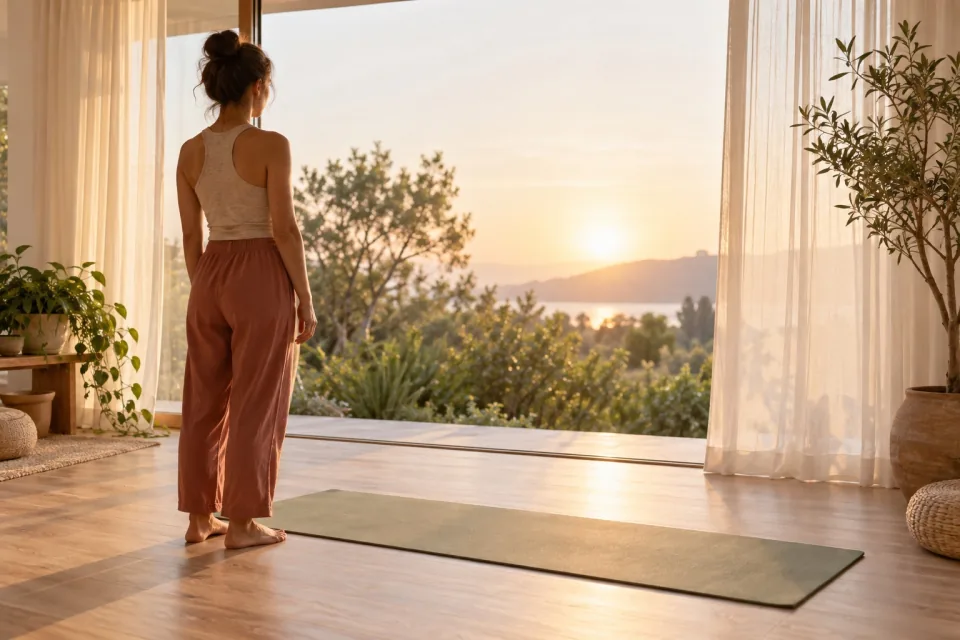
Stand and move your joints
Begin standing with your feet about hip-width apart and your arms resting beside you. This practice combines movements from the cited guides into a preparation sequence that finishes at the opening of your sun salutation.
Look toward a fixed point ahead. Keep your eyes open as you settle into the standing position and let your arms hang beside your body.
Pause for an unhurried breath before starting the joint movements. Let this standing pause separate arriving on the mat from beginning the moving practice.
Circle your wrists slowly with your hands free of the floor. Make the movement at the wrists while keeping the rest of your arms relatively still.
Reverse the wrist circles. Follow the movement around its whole path, keeping the circles small enough to make without a sudden change of direction.
Roll your shoulders in a comfortable circle. Let your arms stay beside you so that the shoulder movement remains separate from the overhead reach that comes next.
Bend your knees gently, then return toward standing. Keep this as a small bending and straightening movement while your feet remain on the mat.
Circle your hips within a comfortable range. Let the movement remain modest rather than making the circle larger with each turn.
Bring the joint movements to a close with your feet settled beneath you. Allow your arms to return to their starting position before adding the overhead reach.
Use the pace of your breathing as a guide while moving. Let a movement take longer when needed instead of trying to complete the preparation at a fixed speed.
Choose a slow pace for the sequence ahead. Yoga Journal recommends moving slowly and attentively when sun salutations are preparation for a longer practice.
Stage 2 of 6
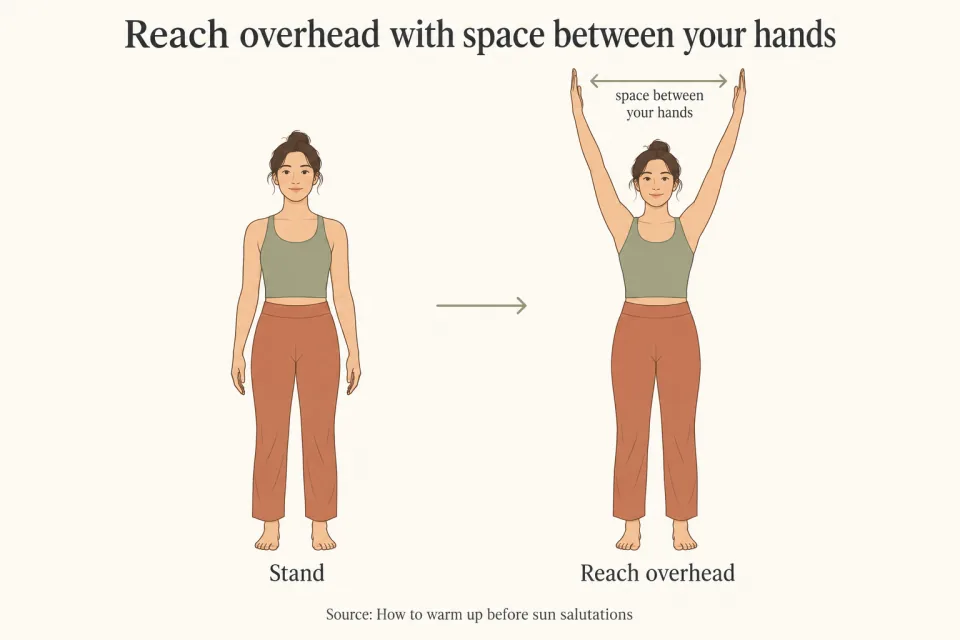
Reach overhead with space between your hands
Breathe in and sweep your arms upward into Upward Salute. Keep your feet grounded while your hands travel overhead.
Leave space between your hands, with your palms facing inward. Begin with the hands about shoulder-width apart instead of making their meeting point the aim of the movement.
Allow your shoulder blades to travel upward and outward as your arms rise. Follow that movement while keeping the reach at a height that feels comfortable.
Keep the front of your ribs soft as you reach. Let the height of your hands come from the arm movement, with your chest staying in its standing position.
Open your arms into a wider V if that is the easier shape. Use the width that lets you make the reach without changing the position of your torso.
Move your arms slightly forward if reaching directly overhead feels difficult. The hands can finish ahead of your body while still remaining well apart.
Choose the height of the reach independently of its width. A wide arm position can stay lower, and the hands can remain apart throughout the movement.
Keep looking ahead while your arms rise. Use the same fixed point as in standing so that the reach does not require a change in where you look.
Lower your arms back beside your body. Let the return be a complete movement before deciding whether to rehearse the reach again or continue into the fold.
If you repeat the reach, begin it with an inhalation. Reuse the arm width and height you have just chosen rather than changing the shape simply because the movement is familiar.
Finish with your arms beside you and your feet grounded. Carry this version of the reach into the standing rehearsal later in the practice.
Stage 3 of 6
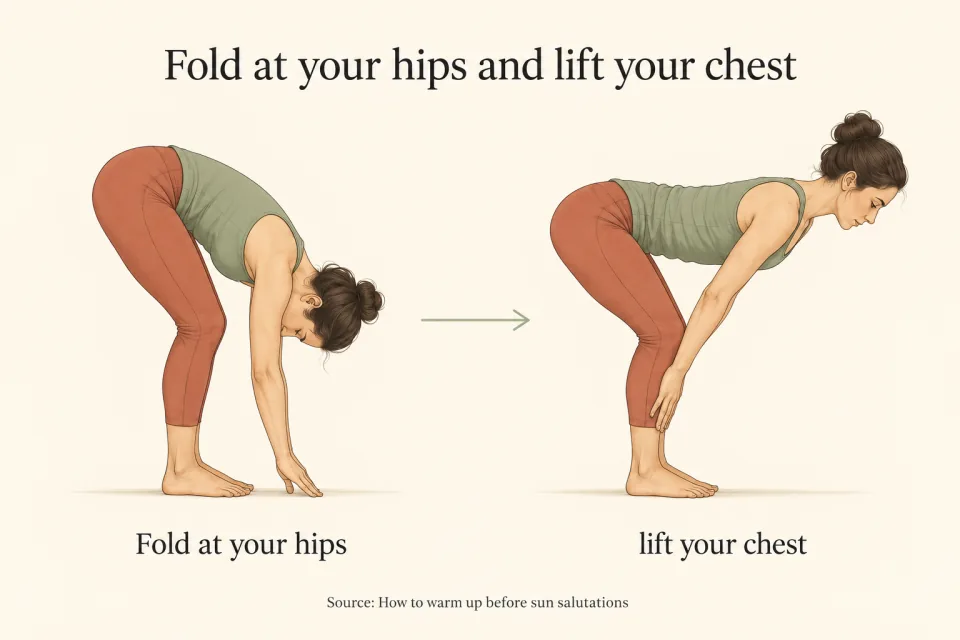
Fold at your hips and lift your chest
Breathe out and fold forward from your hips into Standing Forward Bend. Begin with your knees slightly bent so that the movement starts with a soft bend in the legs.
Let the crease at your hips guide the fold. Follow the torso forward and downward while keeping the movement centered there.
Bend your knees further if you want your torso to rest against your thighs. Choose the bend according to that contact rather than trying to hold the legs straight.
Bring your hands to a surface you can reach. Use blocks beneath them when the floor is farther away than your chosen fold allows.
Keep the blocks beneath your hands as you settle into the position. Let the raised surface meet your hands without changing the fold to reach past it.
Use a chair seat beneath your forearms as another supported version. Fold toward the seat and allow the forearms to rest there while your knees remain bent.
When using hand support, leave your knees softly bent as you explore the fold. If you begin to straighten your legs, keep a little give at the knees.
For Half Forward Fold, place your hands against your shins and breathe in. Lift your torso partway while reaching your chest forward.
Let your back lengthen in the half lift. Keep your hands at a place on the shins that works with the position of your torso.
Bend your knees more if straightening your legs makes your lower back round. Keep the chest reaching forward as you settle on the leg position.
Breathe out and return to the fold. Let the torso lower as the knees take the bend you used earlier.
Rehearse the change between the fold and the half lift at an unhurried pace. Inhale as the chest moves forward and upward, then exhale as you fold again.
Return toward standing with an inhalation and an overhead reach. Breathe out as your arms come back beside you, completing the standing rehearsal before moving to the floor.
Reach overhead with space between your hands. Image: Yogasana Live Stage 4 of 6
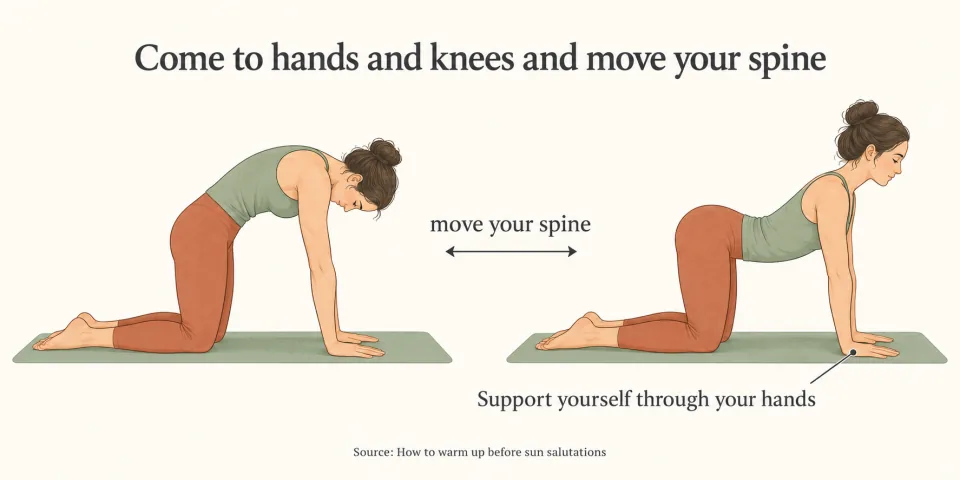
Come to hands and knees and move your spine
Come down to the mat and arrange yourself on your hands and knees. Place your palms beneath your shoulders and your knees beneath your hips.
Look toward the floor with your head in line with your spine. Begin from this tabletop position before adding any arching or rounding.
Breathe in and move into Cow by lifting your tailbone. Let your belly lower slightly as your chest travels forward.
Keep the arch small at the beginning. Allow the chest movement to stay modest while your hands and knees remain in their starting places.
Let the front of your body lengthen without pushing into a deeper arch. Keep space along the back of your neck as your chest moves forward.
Breathe out and move into Cat by tucking your tailbone. Let your back round as your chin comes toward your chest.
Follow the rounding through your spine. Keep the movement slow enough that your head follows the change instead of leading it.
Begin the next change at your tailbone as the breath starts. Let your head be the last part to follow as you move between the arch and the round.
Choose the size of each movement by how comfortably you can make it. Stay with the smaller version or gradually use more range while keeping the pace slow.
Keep your hands beneath your shoulders as you continue. Let the spinal movement happen over that hand placement rather than repeatedly moving the palms to new positions.
Return to a level tabletop when you finish the arching and rounding. Settle with your head in line with your back before changing the position of your legs.
For a seated alternative, sit evenly on a chair with your feet flat and your hands on your thighs. Use that seated base for a small version of the same arching and rounding movement.
Choose the floor or seated version for this part of the practice. The hand-supported work that follows begins from tabletop, while its chair option uses the chair seat beneath the palms.
Fold at your hips, then lift your chest. Image: Yogasana Live Stage 5 of 6
Support yourself through your hands
From tabletop, make a small Cow tilt followed by enough Cat tilt to bring your lower back out of the arch. Finish with your torso ready to stay in that position as your legs move.
Choose a knees-down Plank for the next movement. Position your knees so that your body makes a long line through your shoulders toward the crown of your head.
Place a folded blanket beneath your knees if you want cushioning. Keep the knees on that surface while arranging the rest of the pose.
Bring your shoulders over your wrists. Press through your hands while keeping your upper back broad between the shoulder blades.
Reach your breastbone forward in the knees-down position. Keep the line of the torso long as you maintain the placement of your shoulders over your hands.
For full Plank, step your feet back in turn from tabletop. Keep your shoulders above your wrists as the knees leave the floor.
Reach forward through your breastbone and backward through your heels. Keep your abdomen engaged while holding the position of your torso between those directions.
For the chair-supported version, secure the chair so that it cannot slide before putting your hands on its seat. Then walk your feet back into the sloping Plank position.
Return to tabletop for the entry into Downward-Facing Dog. Set your knees beneath your hips again before moving the hands slightly farther forward.
Spread your fingers and tuck your toes under. Begin the next movement with the palms already placed and the toes ready against the mat.
Breathe out as you lift your knees and send your hips up and back. Keep the knees bent during this entry into Downward-Facing Dog.
Press through your knuckles and the bases of your index fingers. Maintain that contact as your hips move away from your hands.
Let your head rest between your upper arms with your neck relaxed. Keep your heels lifted if that works with the bent-knee position you have chosen.
For a moving version, alternately raise and lower your heels. Let the feet take turns without making contact between the heels and the mat a requirement.
For a wall version, place your palms about shoulder-width apart at hip height or higher. Step back from the wall while keeping your hands in place.
If you enter Downward-Facing Dog directly from Plank, keep your hands and feet planted as your hips rise. Add a slight bend at the knees during the change.
Move your spine while supported on hands and knees. Image: Yogasana Live Stage 6 of 6
Return to standing and begin the round
Return your feet toward your hands and settle into a bent-knee fold. Use the hand support and knee bend you chose during the earlier standing rehearsal.
Breathe in and lift your chest into Half Forward Fold. Let the hands rest on the shins while the chest reaches forward.
Breathe out and fold again. Allow your knees to bend as much as they did in the preparation rather than changing the leg position for this return.
Breathe in and rise into your overhead reach. Keep the hands apart and use the arm width and height you have already rehearsed.
Breathe out and lower your arms into Mountain Pose. Pause standing with your feet grounded and your arms beside your body.
Begin the opening of your sun salutation by inhaling into Upward Salute. Let this reach use the same forward gaze and soft position of the front ribs as before.
Exhale into Standing Forward Bend. Keep the fold centered at the hips and let your knees bend as your torso comes down.
Inhale into the half lift with your chest moving forward. Keep the hands on the shins or use the raised hand support already chosen for your fold.
Continue from the half lift by placing your hands down and stepping your feet back in turn into Plank. This added step back is where the standing rehearsal continues into the round.
Choose the knees-down version if that is the Plank you practiced. Arrange the long line through your torso before moving on.
Move into Downward-Facing Dog by lifting your hips with your hands and feet planted. Keep a slight bend at the knees as you make the change.
Let a posture last longer whenever the usual breathing pace feels hurried. Resume the next movement when you can follow it without rushing the breath.
Continue with the version of the sun salutation you are learning. Keep the wider reach, bent-knee fold and chosen hand support available as you move through it.
Leave out a section that you do not want to include in your chosen sequence. Yoga International describes shortening a sun salutation by omitting sections as well as adapting individual poses.
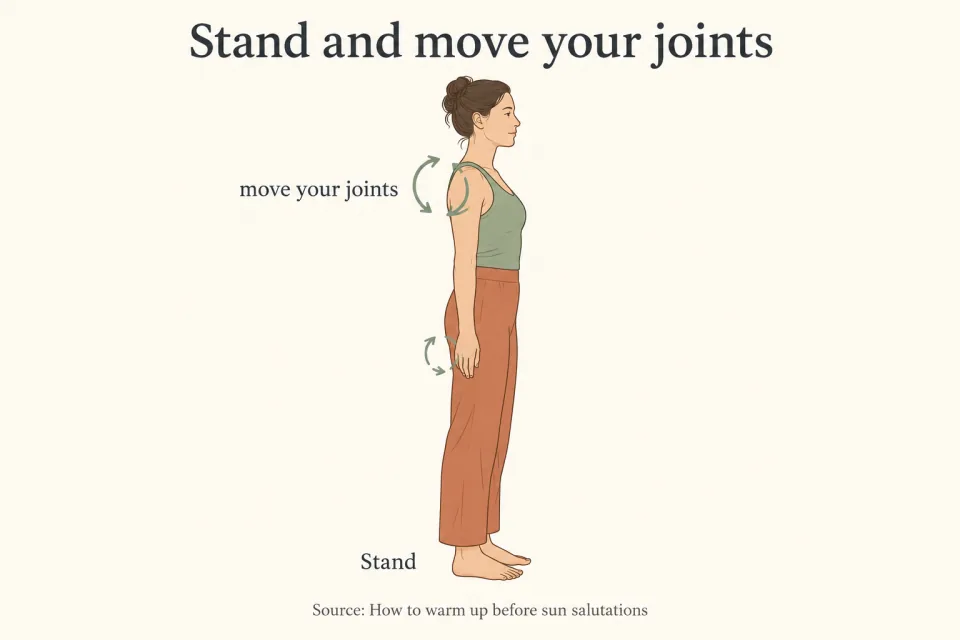
Standing preparation includes moving your joints. Image: Yogasana Live
Sources for this practice
- Making Yoga Accessible: Sun Salutations and Warm-Ups
- 10 Steps to Perfect Sun Salutations
- A Step-By-Step Guide to Sun Salutations
- Upward Salute
- Standing Forward Bend
- Cat-Cow Stretch: A Gentle Move With Big Benefits
- How to Practice Plank Pose
- Downward-Facing Dog Pose
- Three Ways to Practice Downward Facing Dog
- 10 Yoga Warm-Up Poses
- A Comprehensive Guide to Sun Salutation Sequences A, B, and C
How this practice came to be
- Written
- By Yogasana Live; no person is named as its writer
- What it rests on
- 11 sources
More from the library
Yoga meditation for a noisy home
Follow a seated meditation practice with ordinary household sounds present. Explore breath, sound and touch as attention anchors, then practise returning after wandering thoughts or an interruption.
Head-to-knee pose: align your torso before folding
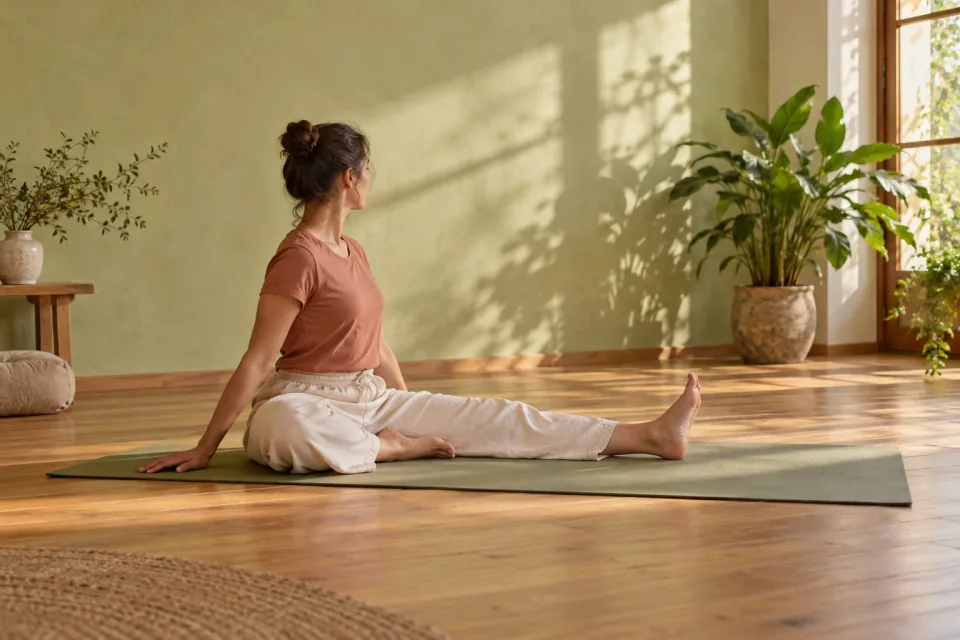
Follow a seated practice that guides your abdomen and ribs toward the extended leg. Choose a reachable hand position, fold from the hips and practise lifting out to reset your alignment.
Follow floor yoga without watching the screen
Preview entries and exits, recognise spoken position cues, and pause demonstrations before moving onto your belly or reclining. Follow a guided method for practising between viewings.