
- Yogasana Live
- Yoga meditation for a noisy home
A guided practice
Yoga meditation for a noisy home
Follow a seated meditation practice with ordinary household sounds present. Explore breath, sound and touch as attention anchors, then practise returning after wandering thoughts or an interruption.
- First shared
- Stages
- Go to the list of 6 stages
This version went live once the site's automated checks on its content and sources had passed, on Thursday, 19 November 2026. Before you practise

Stage 1 of 6
Sit with the room as it is
Take a comfortable seat while the ordinary sounds of home continue around you. Begin with the room as it is, allowing a refrigerator hum or voices elsewhere to be present.
Choose a time when you feel awake and expect fewer interruptions. Look for an opening in your day that you can use again, without making complete quiet a requirement.
Choose five minutes for a short starting session, as Tara Brach suggests. Decide on the duration before settling into the practice, so you begin with that choice already made.
Use a chair or sit comfortably on the floor. Choose your position by how it feels to sit there, without making a particular seated shape part of the task.
Place the soles of your feet on the floor if you use a chair. Let this be your starting position while you arrange the rest of your seat.
Bring your upper body upright while keeping its natural curves. Let the position feel easy enough to remain in, without trying to make your back completely straight.
Rest your hands on your legs wherever they fit naturally. Allow your upper arms to stay beside your torso rather than holding your hands away from your body.
Let your shoulders relax. Keep the upright position without continuing to hold your shoulders up as part of it.
Keep a soft gaze if you leave your eyes open. Allow the scene ahead to remain unfocused instead of choosing an object to stare at throughout the practice.
Notice where your body meets the chair or floor. Attend to the contact already present, without searching for a particular feeling or trying to describe every point of contact.
Stop the exercise if it feels uncomfortable.
Read the next cue, then pause to follow it before continuing. Use the written practice at your own pace, leaving space between reading an instruction and moving to the next.
Stage 2 of 6
Notice the breath where you feel it
Bring attention to the breath you are taking now. Begin by noticing its movement before deliberately turning toward the sounds around you.
Feel for breathing at the nostrils. Stay with whatever sensation you notice there, without requiring a detailed account of how each part of the breath feels.
Explore the movement of your chest if that is easier to follow. Let the movement itself be the focus instead of picturing what breathing is supposed to look like.
Notice the belly expanding and releasing if that movement is clear. Follow the movement that is present rather than asking it to match a shape you have in mind.
Rest a hand on your belly if you want to follow breathing through contact. Attend to the movement beneath your hand as breathing continues.
Leave the belly alone if no particular breathing sensation is apparent there. Return to another place where the breath is noticeable, without making the absence of a sensation into another task.
Choose the breath sensation that you can follow most readily. Stay with that location for now instead of moving between the nostrils, chest and belly with every change in attention.
Silently pair the word in with breathing in, if words suit the practice. Pair out with breathing out, keeping the words connected to the breath that is happening.
Allow a household sound to remain in the background while you attend to breathing. If you hear a clock, keep noticing the breath without trying to remove the ticking from awareness.
Return to the breath when you notice that you are thinking about the clock. Find the sensation again at your chosen location and continue from the breath already under way.
Let thoughts be present without asking for an empty mind. When you notice that attention has followed a thought, take that moment as the cue to reconnect with breathing.
Stage 3 of 6
Rest attention on breath, sound or contact
Choose an anchor for this part of the practice: breathing, hearing or bodily contact. Use the word anchor to mean the focus you return to when attention wanders.
Keep breathing as your anchor if its movement is easy to notice. Let sounds come and go around that focus without making each new sound a reason to change the practice.
Try hearing if household sounds repeatedly take the foreground. Deliberately attend to the sounds themselves, giving listening the place that breathing held a moment ago.
Explore the sensations in your hands if you prefer contact as a focus. Notice what is present where they rest, without needing to move them to produce a sensation.
Use contact with the chair or floor as another possibility. Attend to a place where contact is clear, rather than trying to follow every sensation throughout the body.
Choose a sensation that feels neutral or pleasant. Let that quality guide your choice without demanding that the whole room or the whole experience feel the same way.
Compare breath and sound through the refrigerator example. With breathing as the anchor, notice your chosen breath sensation while the hum stays in the background.
Make the hum the focus when you want to try listening. Attend to its sound while breathing continues, without trying to keep the breath equally prominent.
Try contact while the same hum remains audible. Notice your hands resting on your legs, allowing the sound to be present without following its details.
Choose the version in which attention rests most readily right now. Keep the comparison practical, based on what you notice during the practice rather than what you think you ought to prefer.
Let your choice remain flexible during the session. If listening no longer suits the practice, return to breathing or contact and spend time with the new focus.
Stay with the chosen anchor long enough to explore it. When another sensation appears, notice it without immediately turning the practice into a fresh comparison of all the available options.
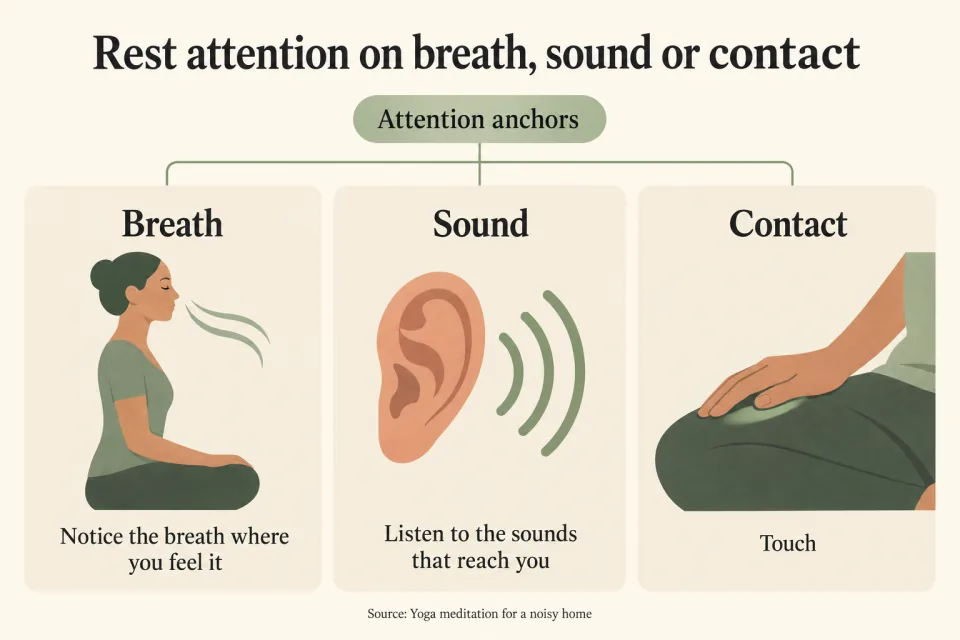
Breath, sound and contact are shown side by side. Image: Yogasana Live Stage 4 of 6
Listen to the sounds that reach you
Turn toward hearing and receive the sounds already reaching you. Begin with whatever is audible, whether it is a steady appliance hum, passing traffic or pots moving in the kitchen.
Notice a sound inside the room. Attend to how it reaches you without needing to look toward its source or confirm exactly what makes it.
Include sounds from outside the room as they become noticeable. Explore whether a sound seems nearby or distant, keeping attention on the listening experience.
Attend to volume. Notice whether the sound is loud or quiet, and follow any change without making loudness a judgment about how well the practice is going.
Explore pitch when that quality is apparent. Listen to whether the sound seems high or low, without needing a precise label for it.
Notice the tone of the sound. Stay with how it sounds rather than building a description that you have to remember afterward.
Follow a brief sound through its ending. If a pot clatters and then stops, notice the end instead of continuing to search for the sound after it has passed.
Attend to a sound that recurs, such as a ticking clock. Hear its repeated arrival without requiring yourself to predict the next tick or keep a record of the pattern.
Listen to a steady background sound on its own terms. If the refrigerator hum continues, stay with its audible qualities without waiting for something more varied to replace it.
Rest attention on the quiet that follows when a sound stops. Allow that quiet to be the present experience, without making its continuation a condition for staying seated.
Notice the impulse to attach a picture or label to what you hear. Recognize the image of the kitchen or the word traffic, then return to the sound that is available now.
Acknowledge your response if you dislike a noise. Let the response be present without requiring yourself to enjoy the sound before you can continue listening.
Return to hearing when a sound leads into a train of thought. Approach the return without judging the thoughts or using their arrival as a verdict on the session.
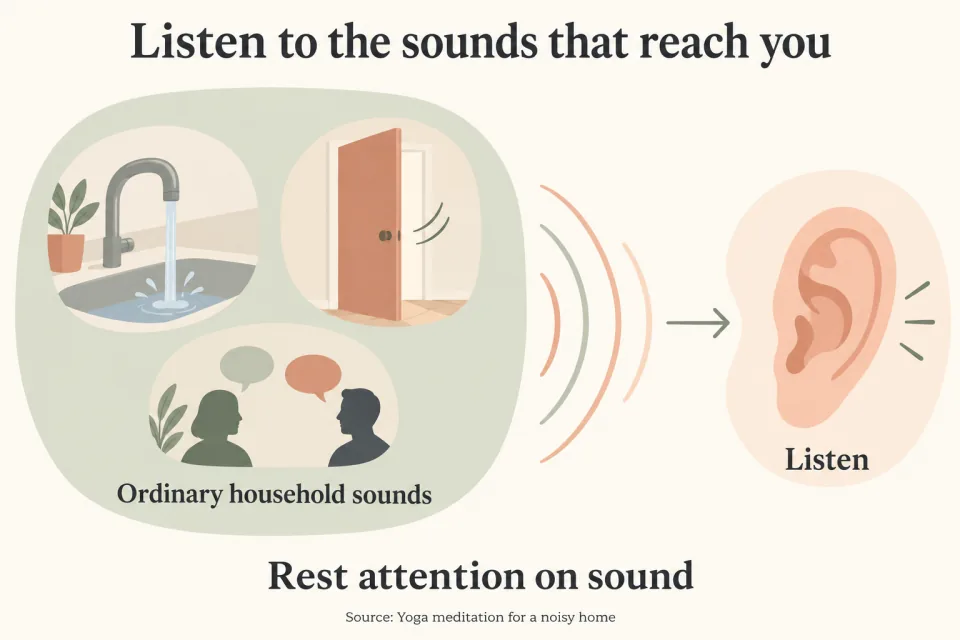
Ordinary household sounds reach the listener. Image: Yogasana Live Stage 5 of 6
Return after a thought or an interruption
Reconnect with your chosen anchor whenever you notice that attention has moved away. Start with what is available now, rather than trying to recover the exact experience you had before.
Distinguish hearing a sound from following thoughts about it. In the refrigerator example, notice whether you are attending to the hum or thinking about the appliance and what you need to do later.
Keep breathing as the focus when the hum is simply present in the background. Continue with the breath sensation without turning the fact that you hear something into another problem to solve.
Recognize a train of thought when you notice that you have followed it. Return to the chosen anchor without finishing the thought as part of the meditation exercise.
Explore sound deliberately if it keeps taking attention away from breathing. Listen to the hum itself, using the change of focus as a choice within the practice.
Notice the difference between choosing to listen and discovering that you are already absorbed in a story about the noise. When the story becomes apparent, come back to the sound rather than analysing how you got there.
Check what has drawn your attention most often if you are unsure which anchor to use. Accept an approximate impression, without replaying the whole session to produce an exact answer.
Pause to notice breathing before answering a ringing phone. Let the pause belong to the ordinary action of answering, without asking the ringing to become part of a longer listening exercise.
Attend to the interruption when you choose to respond. Allow that response to be the activity you are doing, instead of trying to continue the seated instructions at the same time.
Return to a comfortable seat when you are ready to resume. If you have left the chair, place your feet on the floor again and let your hands rest naturally.
Notice contact with the seat before picking up your anchor. Use the position you are in now as the starting point for the next part of the practice.
Reconnect with breathing, hearing or contact according to your present choice. Resume with a cue that fits that focus, such as noticing the belly move or listening to the sound currently in the room.
Let the return be part of the practice. Continue from the present sensation without requiring the interrupted stretch to have been free of wandering thoughts.
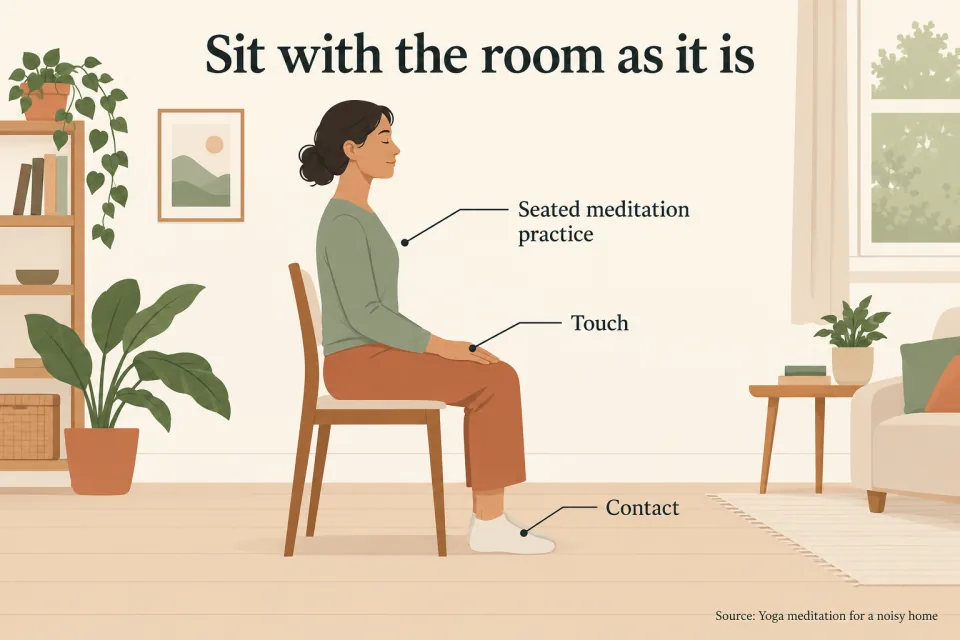
The seated diagram highlights touch and contact. Image: Yogasana Live 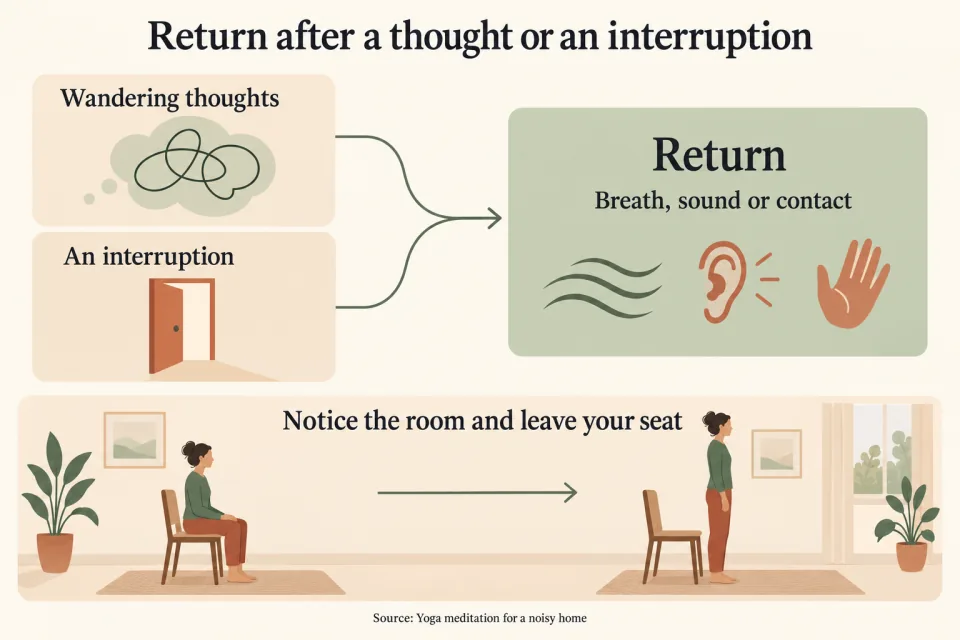
The diagram shows returning attention and leaving the seat. Image: Yogasana Live Stage 6 of 6
Notice the room and leave your seat
Let attention include the surrounding room as you finish. Hear the sounds that are present at the close, without checking whether the home has become quieter since you began.
Notice how your body feels in the seated position. Include contact with the chair or floor rather than attending only to the anchor you used during the practice.
Acknowledge the thoughts present at the end. Let them be part of what you notice, without requiring them to stop before the session can close.
Notice your emotional response to finishing. Leave room for the response you find, without looking for a particular feeling as evidence that you followed the instructions correctly.
Remember which anchor was easiest to return to. Consider the actual experience of breath, sound or contact during this session rather than choosing according to an idea of the ideal meditation.
Consider beginning with that anchor next time. Keep the choice open to revision if another focus suits the next session more readily.
Recall what most often drew attention away, if a pattern is clear. Keep this review brief and approximate, without counting distractions or grading how often you returned.
Notice the intention to move before changing your position. Follow the movement with attention as you adjust your hands or prepare to leave the seat.
Carry the same attention into an ordinary pause when the opportunity arises. If a phone rings, notice breathing before you answer, as you practised during the interruption stage.
Return to seated practice when another suitable opening appears in your day. If you miss a planned session, begin again when you can without making the missed practice a failure.
Sources for this practice
How this practice came to be
- Written
- By Yogasana Live; no person is named as its writer
- What it rests on
- 7 sources
More from the library
Breath counting or mantra repetition for yoga meditation
Explore breath counting and mantra repetition through a seated practice. Compare what you attend to, how repetition follows the breath and what to do when you lose your place.
Morning yoga with a shorter or longer practice
Follow the same beginner pose order for a short or longer morning practice. Give extra time to preparation, repeated standing movements and a separate closing pause, with adjustments beside each pose.
How to warm up before sun salutations

Follow a guided preparation sequence for reaching overhead, folding at the hips and supporting yourself through your hands, then move into the opening of your sun salutation.