
- Yogasana Live
- Sun salutation breathing mistakes: a slower beginner practice
A guided practice
Sun salutation breathing mistakes: a slower beginner practice
Practise the standing movements, then follow a version with cobra and downward-facing dog. Learn where to finish an inhalation, pause a movement and allow extra breaths.
- First shared
- Stages
- Go to the list of 6 stages
This version went live once the site's automated checks on its content and sources had passed, on Tuesday, 27 October 2026. Before you practise
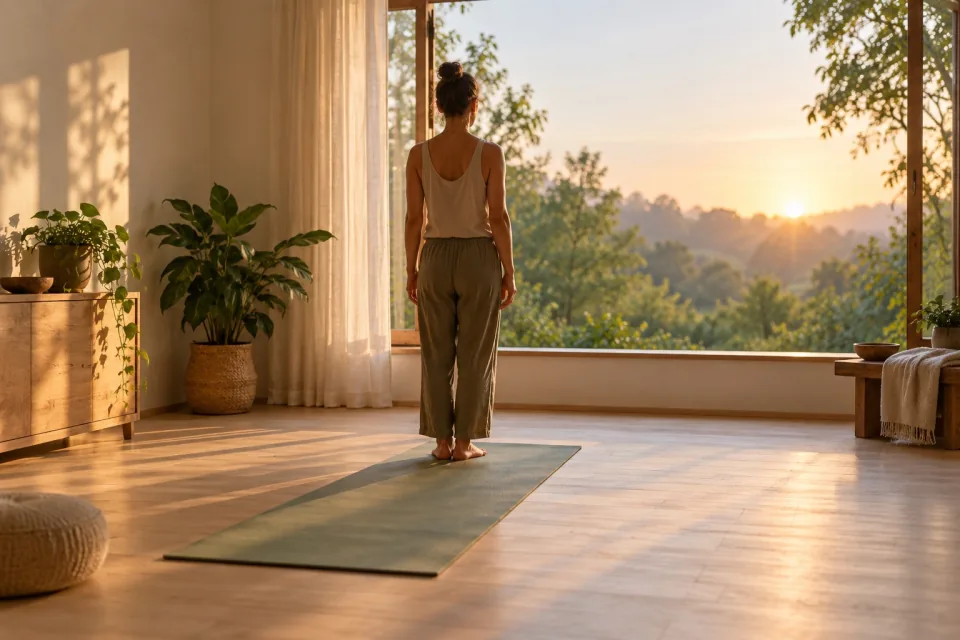
Stage 1 of 6
Stand and let your breath set the pace
Begin your sun salutation by letting your breathing set the movement pace. Keep that approach as you learn the standing movements and then add the floor transitions.
Start in mountain pose and take one complete breath before raising your arms. Let the inhalation and exhalation finish while you remain standing.
Notice the pace of this starting breath. Use it as your starting point for movement, without trying to make the next breath noticeably longer or louder.
Keep your inhalation unhurried and unforced. Carry that same quality into the arm raise instead of taking a large preparatory breath and holding it while you arrange the movement.
If you already practise ujjayi, keep its sound unforced. Give your attention to the smoothness of the breath as you move, rather than trying to make the sound more pronounced.
Practise that breathing technique while seated comfortably before bringing it into a moving sequence. When you return to standing, keep the breathing and the movement simple enough to follow together.
Choose the standing half salutation as your first rehearsal. Follow the arm raise, forward fold and half lift, then return to standing before adding the step back.
Follow your own breathing pace if you practise beside someone else. Let your next movement begin with your own inhalation or exhalation, even when the other person has already moved.
Treat a pause as time to keep breathing while the movement waits. In the stages below, an extra breath belongs inside the practice rather than between a hurried movement and the next hurried movement.
Use the version described here when following these cues: a standing opening followed by a floor transition through cobra and downward-facing dog. Keep its movements together while learning, since sun salutation sequences and their pace vary between traditions.
Stage 2 of 6
Raise your arms and fold in stages
Breathe in as you raise your arms overhead. Let the arm movement accompany the inhalation without pulling the breath along to match a faster reach.
Breathe out as you move into the forward fold. Keep your knees gently bent and let your neck release as you fold.
Practise the fold in smaller stages when the whole movement feels hurried. Begin on an exhalation, pause partway down and keep breathing before continuing.
Pause partway through the forward bend for one or more breaths. Continue the downward movement on a later exhalation.
During that pause, leave the movement unfinished while your breath continues. You do not need to keep moving downward throughout the inhalation that comes between the stages of the fold.
Try the staged version as a specific rehearsal: start folding as you breathe out, remain partway down while breathing, then continue folding as you breathe out again. Keep your attention on the change between moving and staying.
When the exhalation ends before the fold is complete, use the pause you have just practised. Let the next breath happen where you are instead of squeezing out more air to finish the movement.
Keep the gentle bend in your knees as you continue downward. Make the next portion of the fold part of the next exhalation, rather than treating the pause as a signal to hurry to the bottom.
At the end of the fold, allow a breathing stay before moving on if you are practising with extra breaths. Remain in the posture while breathing instead of going immediately into the half lift.
Choose between the continuous fold and the staged fold according to the version you are rehearsing. In the continuous version, fold with the exhalation; in the staged version, leave room for breathing between portions of the movement.
Carry the same staged approach into the return from a posture when needed. Pause the upward movement, continue breathing, and resume the movement with its next matching breath.
Stage 3 of 6
Lift halfway and finish breathing in
Breathe in as you lift halfway from the fold and slide your hands onto your shins. Bring your shoulders approximately level with your hips.
Give the half lift its inhalation before moving downward again. Stay with the lifting movement and the breath instead of using the posture only as a brief stop on the way to the floor.
Finish breathing in before you release back into the fold. Then let the exhalation accompany the downward movement.
Practise the hand placement as part of the half lift. Slide your hands onto your shins as you rise, so that arranging your hands does not become a separate task after you have already begun folding again.
Notice whether you are starting the return to the fold while still inhaling. If so, rehearse the half lift again with a clear finish to the inhalation before the next downward movement.
Use a breathing stay if you want to practise the posture separately from the transition. Keep breathing in the half lift, then choose an exhalation for returning to the fold.
Keep the distinction between finishing an inhalation and holding it. In the continuous version, the next exhalation takes you downward; in the slower version, breathing continues while you remain in place.
To finish the standing rehearsal, breathe out into the fold. Breathe in as you rise to standing with your arms raised, then breathe out as you bring your hands to your heart.
Use the staged return if you need more time on the way up. Let the movement pause while you breathe, then continue rising on a later inhalation.
Stay with the half salutation when you want to rehearse the standing breath cues again. Work with the same order of lifting, folding, lifting halfway and returning, without adding the floor movements yet.
For the full version, return to the forward fold after the half lift and prepare to step back. Keep the completed inhalation in the half lift as a distinct part of the sequence, even when you are thinking ahead to the floor.
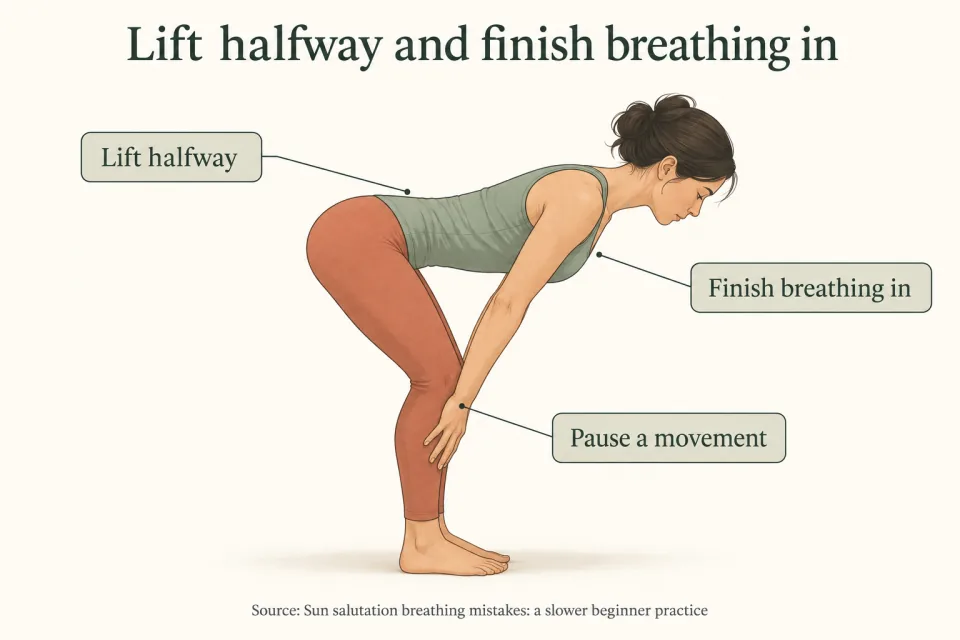
The halfway lift includes a pause to finish breathing in. Image: Yogasana Live Stage 4 of 6
Step back and separate the lowering
From the fold, step back into plank as you breathe out. Choose whether to continue into the lowering movement or to give plank its own breathing pause.
For the continuous pattern, link stepping back and lowering toward the floor with the exhalation. Rehearse that pattern only as a continuous movement, without trying to fit an extra pause into the end of the same outgoing breath.
For the slower pattern, arrive in plank and take an inhalation before lowering. Let the following exhalation accompany the lowering movement.
Practise the difference deliberately: in the continuous pattern, the exhalation accompanies the step back and lowering. In the slower pattern, an inhalation in plank separates those movements.
Use the slower pattern when you want time to arrange the transition after stepping back. Let breathing continue during that preparation instead of waiting in plank with the breath held until you feel ready to lower.
If the step back uses the exhalation, allow the next inhalation in plank. Begin lowering with the next exhalation rather than trying to extend the outgoing breath through an unfinished movement.
Allow further breaths while you remain in a posture if you are practising the slower adaptation. Keep the movement paused and the breathing continuous, then resume with the breath assigned to the next movement.
For the modified floor route, lower your knees to the mat and use cobra in place of the Chaturanga transition. Follow this route through the floor section rather than adding the full lowering movement before cobra.
Give the change to the knees its own attention. Continue breathing as you arrange the modified transition, then move toward the cobra preparation without rushing through the change of position.
Rehearse the step back and the lowering as separate parts if their combined timing is still unclear. First follow the breath into plank, then practise the added inhalation and the exhalation into lowering.
Carry this distinction into later practice of sun salutation B. Use its documented option of an inhalation in plank before lowering, rather than assuming that learning a longer sequence means removing the extra breaths.
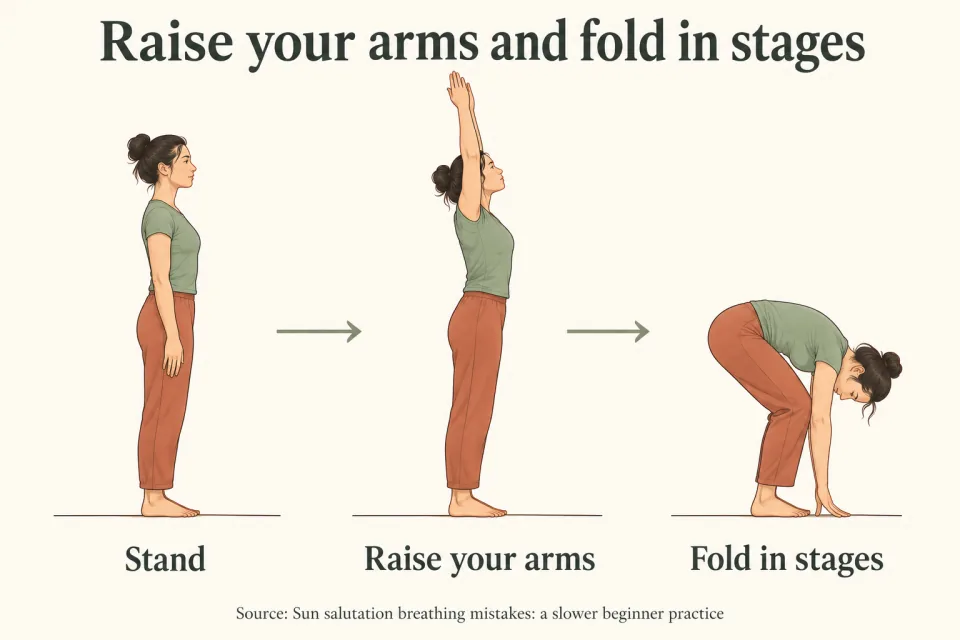
The standing movements unfold in stages. Image: Yogasana Live 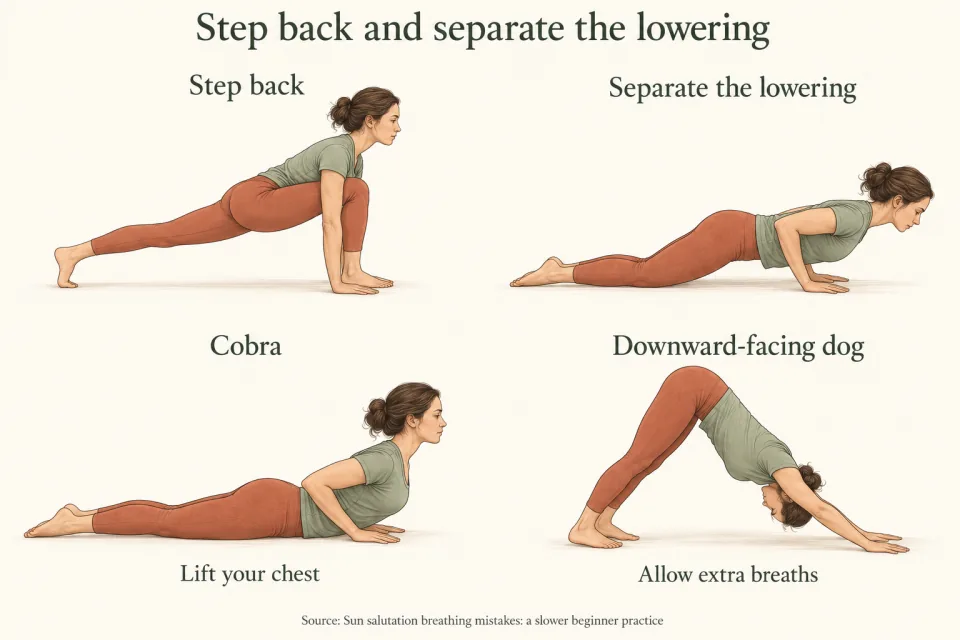
Separate illustrations show the floor movements. Image: Yogasana Live Stage 5 of 6
Lift your chest and breathe in downward dog
Breathe in as you lift your head and chest into cobra. Keep your elbows bent beside your ribs and direct your gaze slightly forward and downward.
Let the inhalation accompany the chest lift. Give the movement time to happen with the breath, rather than lifting first and then taking a quick inhalation before the next transition.
Keep your elbows bent as you settle into the cobra position. Use the stated arm position for this variation while you attend to the breathing cue.
Breathe out as you move from cobra into downward-facing dog. If you are using extra breaths, continue breathing during any pause before that transition and begin the movement on an exhalation.
Keep your knees bent in downward-facing dog as an option while you lengthen your spine. Arrange the posture before turning your attention to the return toward standing.
For the breathing stay used in the supplied sequence, take five complete breaths in downward-facing dog. Let each breath include an inhalation and an exhalation while the posture stays in place.
Keep the breathing stay separate from a breath hold. The movement pauses here, but the breath continues through the stay.
Approach downward-facing dog as a posture in the sequence without requiring it to feel like a rest. Downward-facing dog does not feel restful for every practitioner.
When you want to rehearse breathing with a different movement, practise Cat–Cow separately. Breathe in while opening your chest, then breathe out while rounding your spine.
Follow the chest opening and rounding with their matching breaths during that rehearsal. Keep your attention on the start of each movement, so that the breath and movement begin together.
Return to the sun salutation using the cobra-to-downward-dog transition described here. Keep that route distinct from the separate Cat–Cow rehearsal so that you know which movement belongs to the next exhalation.
As the stay in downward-facing dog ends, turn your attention to the step forward. Leave the breathing continuous while you prepare to change position.
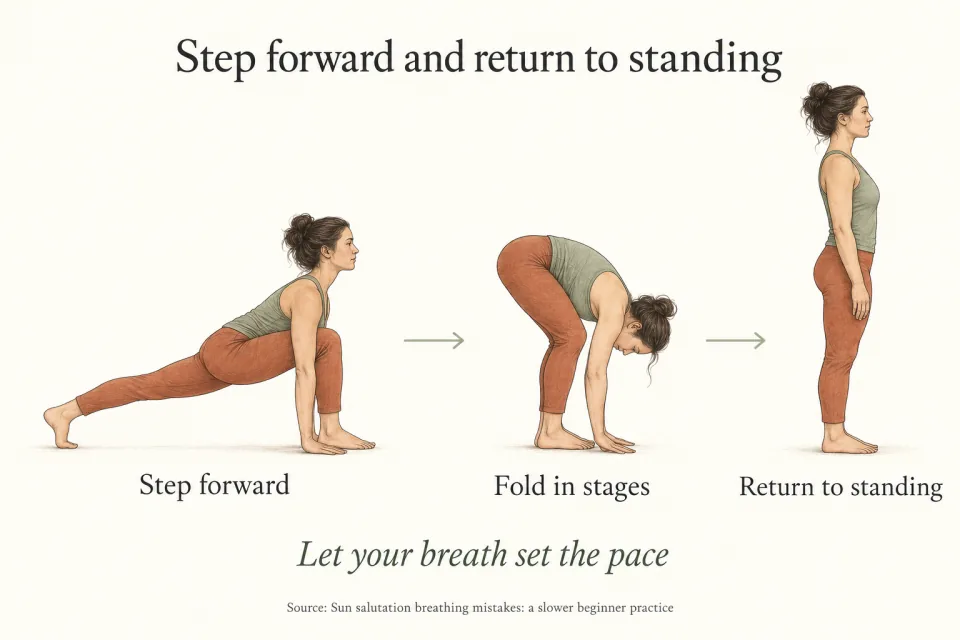
The closing movements return to standing. Image: Yogasana Live Stage 6 of 6
Step forward and return to standing
Step toward the front of the mat from downward-facing dog. Use the stepping option as you learn the return, with time to place your feet before the next standing movement.
If bringing a foot between your hands is difficult, lower your knees to the floor first. Continue the step from that position instead of repeatedly trying to complete the transition from downward-facing dog.
Keep breathing while you arrange the step. Use the same extra-breath approach as earlier, allowing preparation to occupy a breathing pause before the next movement.
Separate placing the foot from rising into the half lift. Finish arranging the return to the front of the mat, then begin the half lift with an inhalation.
Slide your hands onto your shins as you lift halfway. Give this return half lift the same complete inhalation you practised near the start of the sequence.
Breathe out into the forward fold. Let this downward movement have its own place in the return, rather than combining the half lift and the rise to standing into an uninterrupted upward movement.
Breathe in as you rise with your arms overhead. Use the staged approach if you want to pause during the return, continuing to breathe before resuming on a later inhalation.
Breathe out as you bring your hands to your heart. Finish this movement before deciding whether to repeat the standing rehearsal or the full variation.
For a standing rehearsal, work again with the fold and half lift. Put the breathing pause where the fold previously felt hurried, then finish the inhalation in the half lift before folding again.
For a floor rehearsal, use the extra inhalation in plank and the modified route through cobra. Keep those choices consistent as you learn the order, so that the next movement is already decided when its breath begins.
When you later practise sun salutation B, allow additional breaths during its more demanding transitions. Apply the same distinction you have rehearsed here: pause the movement while continuing to breathe, then resume with the chosen cue.
Finish at standing when you have completed the version you intended to practise. Let the final exhalation accompany the hands returning to the heart, with no need to begin another round immediately.
How this practice came to be
- Written
- By Yogasana Live; no person is named as its writer
- What it rests on
- 8 sources
Sources for this practice
- 6 Mistakes You Might Be Making in Sun Salutations (And How to Correct Them)
- Practical Tips to Refresh Your Practice
- Variations on Sun Salutes: Moving Outside the Square
- What is Ujjayi?
- To B or Not to B? The Pros and Cons of a Common Sun Salute
- 15-Minute Yoga to Calm Your Chaotic Mind
- A 15-Minute Yoga Flow That's Perfect for Impossibly Busy Days
- The Conductor as Yogi: Here Comes the Sun
More from the library
Breath counting or mantra repetition for yoga meditation
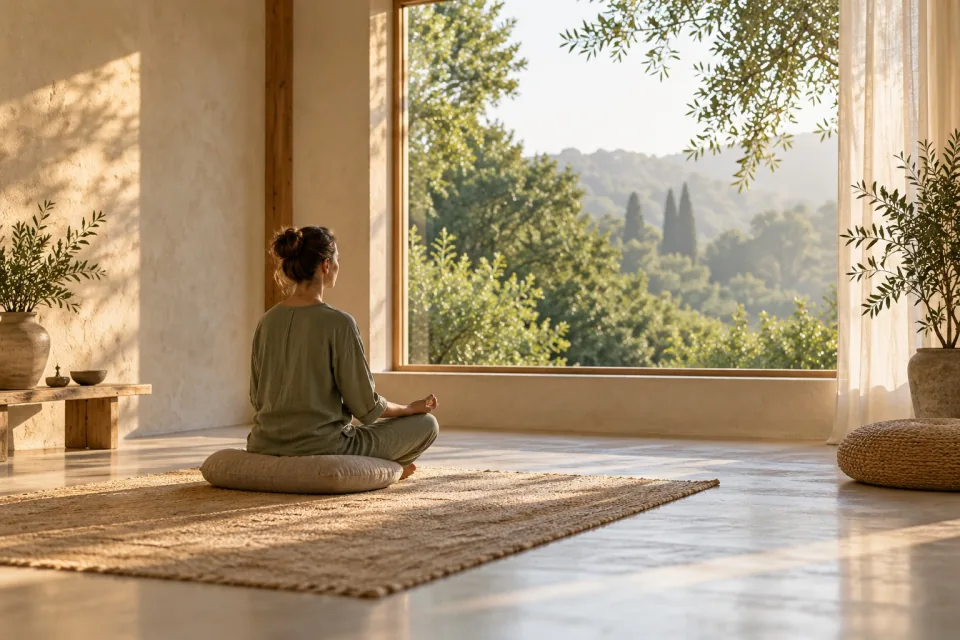
Explore breath counting and mantra repetition through a seated practice. Compare what you attend to, how repetition follows the breath and what to do when you lose your place.
Morning yoga with a shorter or longer practice
Follow the same beginner pose order for a short or longer morning practice. Give extra time to preparation, repeated standing movements and a separate closing pause, with adjustments beside each pose.
How to warm up before sun salutations
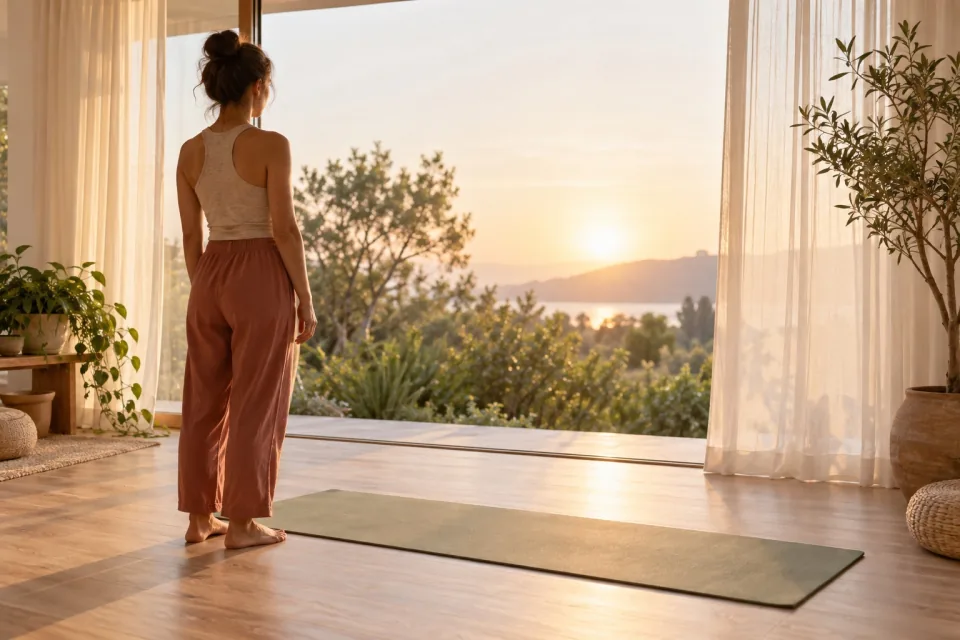
Follow a guided preparation sequence for reaching overhead, folding at the hips and supporting yourself through your hands, then move into the opening of your sun salutation.