
- Yogasana Live
- The difference between breath awareness and pranayama
A guided practice
The difference between breath awareness and pranayama
Follow a seated practice to recognise when you are observing natural breathing and when you begin shaping its rhythm, route or sound.
- First shared
- Stages
- Go to the list of 6 stages
This version went live once the site's automated checks on its content and sources had passed, on Friday, 6 November 2026. Before you practise
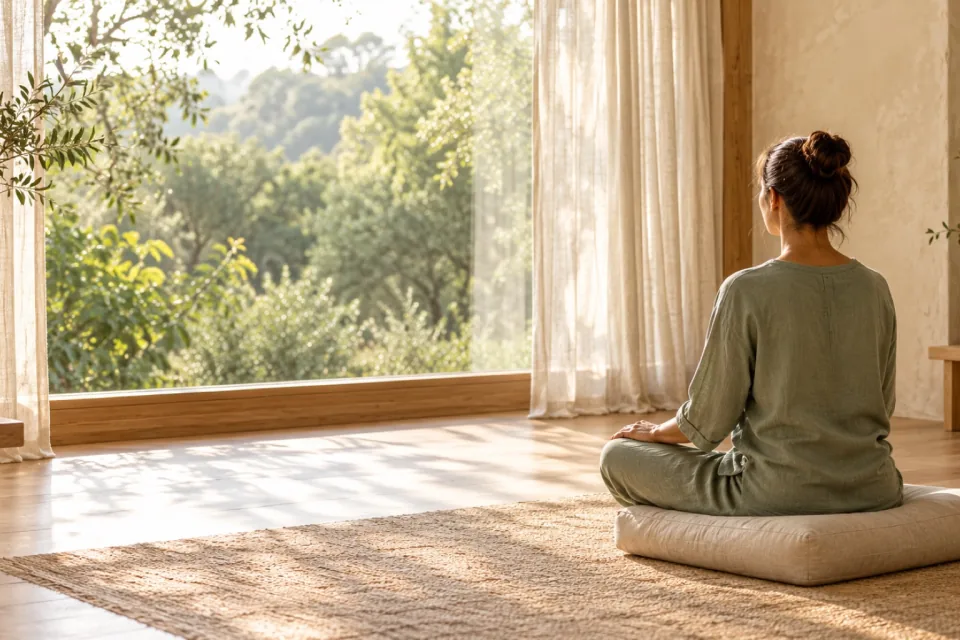
Stage 1 of 6
Sit and leave your breathing unchanged
Sit comfortably and let your breath keep its existing pattern. Breath awareness means observing that pattern, while pranayama means deliberately regulating the breath.
Choose a seated position for this walkthrough. Breath awareness can also be practised standing or lying comfortably, so sitting is a starting choice rather than the feature that defines the practice.
Place your feet on the floor if you sit in a chair. This follows the seated setup in the University of Wisconsin–Madison's breath-awareness exercise, with the feet supported while you attend to breathing.
Gently lengthen your spine. Keep your back upright without holding it tense, allowing the seated position to remain comfortable as you begin.
Rest your hands wherever they feel comfortable. At this point, they have no role in directing air through a particular nostril or setting a rhythm for the breath.
Choose a comfortable way to keep your eyes. Berkeley's instructions allow open or closed eyes, or eyes partly closed with a soft gaze; closing them is not what makes the exercise breath awareness.
Let your next inhalation happen without deliberately making it deeper. Beginning an exercise that concerns breathing does not itself require you to change the breath you are observing.
Allow the exhalation to follow its existing course. For this opening stage, the instruction is to notice breathing without giving either phase a new length.
Attend to what the breathing instruction asks you to do. A comfortable seat, resting hands and a chosen gaze establish the position; the request to observe or regulate identifies your task.
Connect the word pranayama with the breathing instruction you hear. Kerala Tourism explains its Sanskrit components as prana, meaning life or breath, and ayama, meaning extension.
Keep your attention on the breathing that is already present. There is no particular feeling to produce in this comparison, because the distinction concerns how you practise.
Stage 2 of 6
Notice each breath as it happens
Follow the incoming breath without changing its pace or depth. Your task is to notice what happens during inhalation, leaving the breathing itself unchanged.
Follow the outgoing breath in the same way. Observe its course without stretching it to match an idea of how an exhalation ought to feel.
Notice the relative length of inhalation and exhalation. If they seem different, leave that difference in place; noticing unequal phases is still observation.
Attend to a place where you can sense breathing. Berkeley's guide allows you to notice it in some parts of the body without requiring you to sense it everywhere.
Stay with the sensation that is available now. The same guide notes that different areas may be easier to notice at different times of day, so the point of attention need not always be identical.
Notice any pause that happens between breathing phases. Leave it as it occurs instead of deliberately keeping the breath there or trying to create another pause.
Treat the pause as something you observe in the passing breath. A request to notice an existing gap differs from an instruction to retain the breath deliberately.
Return your attention to breathing when it wanders. Continue with the breath that is present when you return, rather than changing it to mark a fresh start.
Use a silent label such as thinking or wandering if you find that useful. Berkeley offers this as an optional way to acknowledge distraction before attending to breathing again.
Recognise a judgment about your breathing as a thought. In the Wisconsin exercise, noticing that judgment does not require you to correct the breathing pattern it comments on.
Spend two minutes observing unchanged breathing, following the University of Wisconsin–Madison exercise. During that time, let the breathing keep its own pattern instead of assigning a length to each phase.
Listen for an instruction to observe the breath as it is. In a class, that request remains an awareness cue even when it asks for close attention to timing, pauses or the place where breathing is noticeable.
Stage 3 of 6
Give inhalation and exhalation a matching rhythm
Breathe in and out through your nose for the equal-breathing example. New Mexico Tech's instructions use nasal breathing while matching the duration of inhalation and exhalation.
Attend to the current length of the incoming and outgoing phases before introducing a count. At this point, you are still observing, even if you notice that an exhalation lasts longer than an inhalation.
Recognise Poorak as a name for inhalation in the NIOS lesson. When this term appears in an instruction, it identifies the incoming phase whose timing you are being asked to follow.
Recognise Rechaka as the lesson's name for exhalation. This term identifies the outgoing phase, so the different names tell you which part of the breathing an instruction concerns.
Now use counting to give inhalation and exhalation equal durations. This instruction changes the task because you deliberately shape the timing instead of simply noticing it.
Give the inhalation a counted rhythm. The count now guides how long you breathe in, rather than merely describing the breath that has already happened.
Carry the matching count through the exhalation. In this example, the outgoing phase follows the same timing instruction as the incoming phase.
Recognise the change at the instruction to make the durations match. Sitting in the same position and attending to the same breath can continue while your task changes from observation to regulation.
Compare noticing a longer exhalation with deliberately matching it to the inhalation. The observed difference belongs to breath awareness; the instruction to make the phases equal belongs to this pranayama example.
Keep the distinction even if the phases already seem equal. Noticing an existing match is awareness; following a count to maintain that match is the deliberate task in this equal-breathing example.
Use a word or short phrase instead of counting if you choose that version of equal breathing. New Mexico Tech offers this alternative for accompanying each breathing phase.
Repeat the word or phrase with the intention of matching the incoming and outgoing durations. Replacing numbers with words changes the aid you use, while the instruction to regulate timing remains.
Keep this comparison focused on the inhalation and exhalation. An added pause or breath hold is optional in New Mexico Tech's equal-breathing instructions.
Distinguish that optional addition from the natural pause you noticed earlier. Observing a pause leaves it unchanged, whereas deliberately retaining the breath introduces a separate action.
Recognise Kumbhak as the NIOS term for breath retention. This names a deliberate holding action, which differs from the unchanged observation of pauses in the breath-awareness exercise.
Recognise equal breathing even when the hands remain at rest. This example regulates timing without using the fingers to switch nostrils, so a special hand position is not necessary to identify deliberate breath regulation.
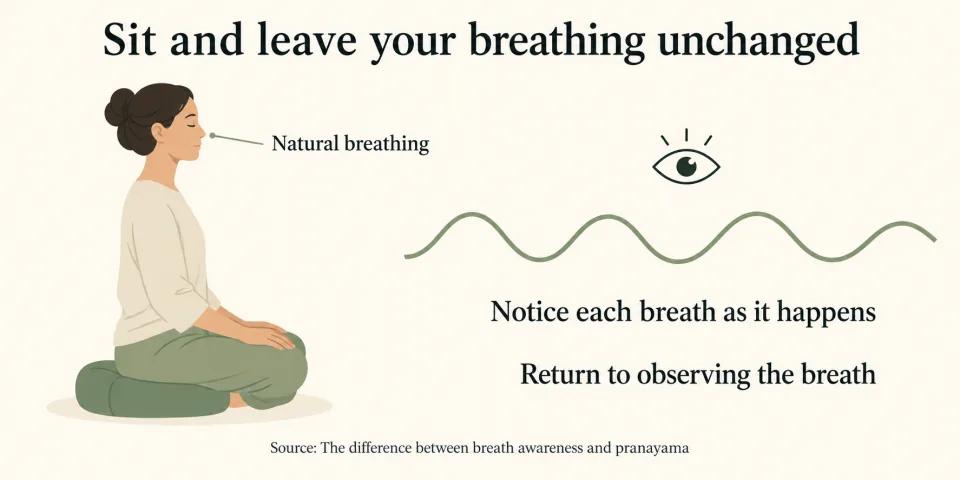
Observe each breath as it happens. Image: Yogasana Live 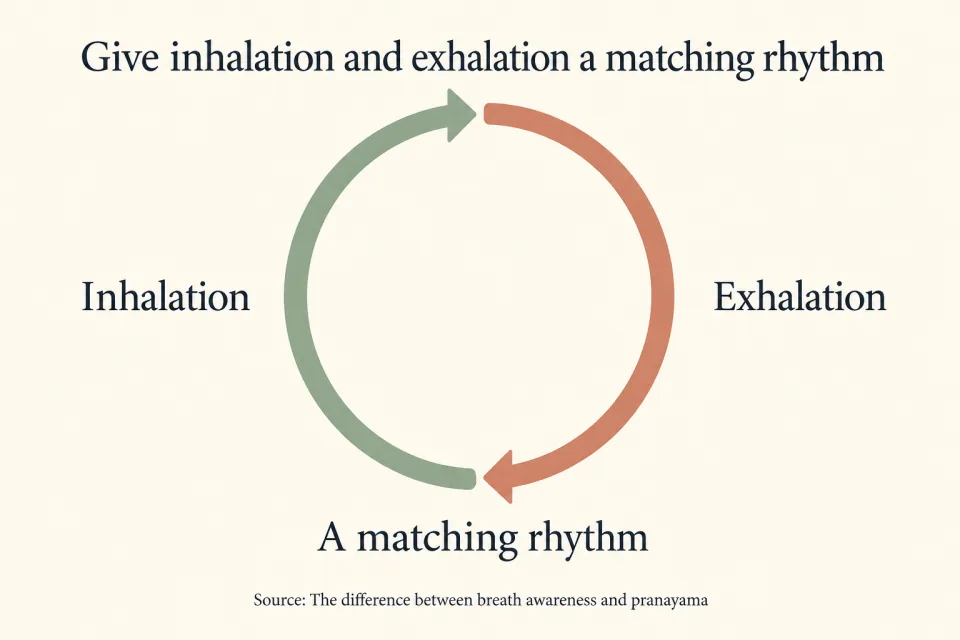
Inhalation and exhalation follow a matching rhythm. Image: Yogasana Live Stage 4 of 6
Change the nostril you breathe through
Use the alternate-nostril sequence to recognise regulation through the route of the breath. The Gujarat State Yog Board describes a sequence that directs inhalation and exhalation through selected nostrils.
Bring your right hand into position near your nose. In the board's setup, the right thumb works at the right nostril, while the ring and little fingers work at the left.
Close the right nostril with your right thumb. This sets the route for the incoming breath rather than asking you merely to observe whichever route occurs naturally.
Breathe in through the left nostril. Follow the selected route without adding the equal-duration instruction from the previous example.
Change the finger position to close the left nostril and release the right. The switch changes where the outgoing breath passes.
Breathe out through the right nostril. This completes the outward phase after the inhalation through the left.
Breathe in through the right nostril. The sequence continues on this side before the fingers switch the route again.
Close the right nostril and release the left. Use the hand arrangement to prepare the route for the next exhalation.
Breathe out through the left nostril. This completes the sequence described by the board: inhalation on the left, exhalation on the right, then inhalation on the right and exhalation on the left.
Attend to the instruction that selects a nostril. The deliberate choice of route identifies regulation here, even without an instruction to make the incoming and outgoing durations match.
Follow the stated direction when an instructor demonstrates the fingers. The hand setup alone does not show the full sequence; listen for which nostril carries the incoming breath and which carries the outgoing breath.
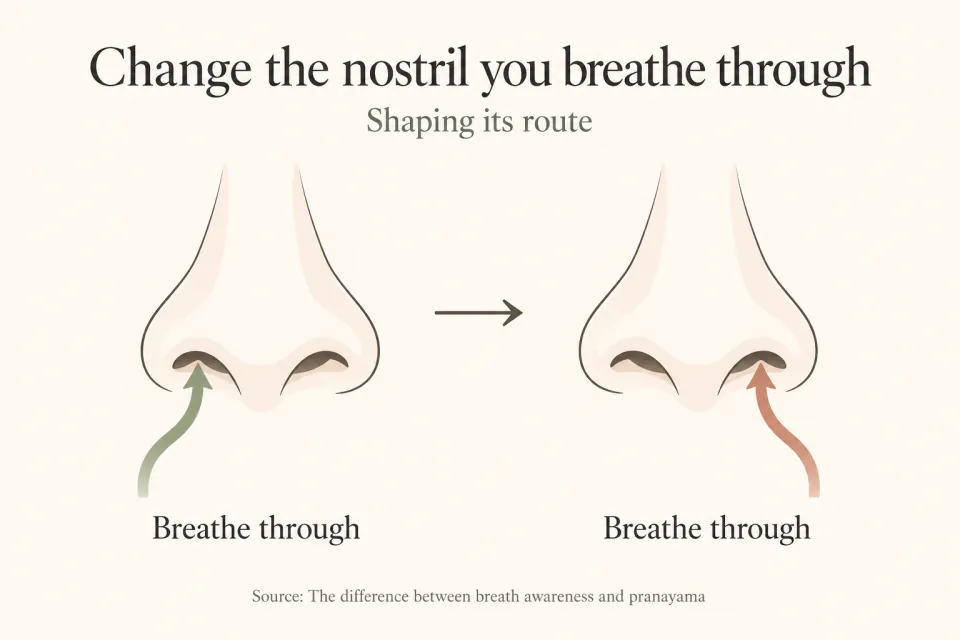
The breathing route changes between nostrils. Image: Yogasana Live Stage 5 of 6
Hum as you breathe out
Use humming breath (Bhramari) to recognise deliberate regulation through sound. The Gujarat State Yog Board's simple version calls for a nasal inhalation, followed by a steady hum during a controlled, slow exhalation.
Keep your hands at rest for this simple example. The board also describes a version with a particular hand arrangement, but the simple version supplies the sound comparison without introducing that arrangement.
Breathe in through your nose. This is the incoming phase of the humming-breath sequence, before the sound accompanies the outgoing phase.
Let a steady hum accompany the exhalation. You are now following a chosen instruction for the outgoing breath rather than observing its unaltered course.
Follow the slow, controlled exhalation described in the board's method. The instruction deliberately shapes this phase, so the example involves more than hearing a sound that happens to be present.
Attend to the hum while it continues with the outgoing breath. Paying attention remains part of what you do, even though you are also deliberately shaping the breathing.
Compare listening to the breath with adding a hum to it. Listening asks you to notice what is already there; humming introduces a sound as part of the technique.
Recognise the practice by its breathing instruction rather than by whether the hands move. Equal breathing uses matched timing, while this simple humming example directs the exhalation and its sound.
Leave the other techniques out while considering this example. Adding a nostril switch or an equal-count instruction would combine actions that the separate examples are meant to make recognisable.
Attend to the end of the humming exhalation. From there, the next stage asks you to release the chosen pattern and return to observing breathing as it happens.
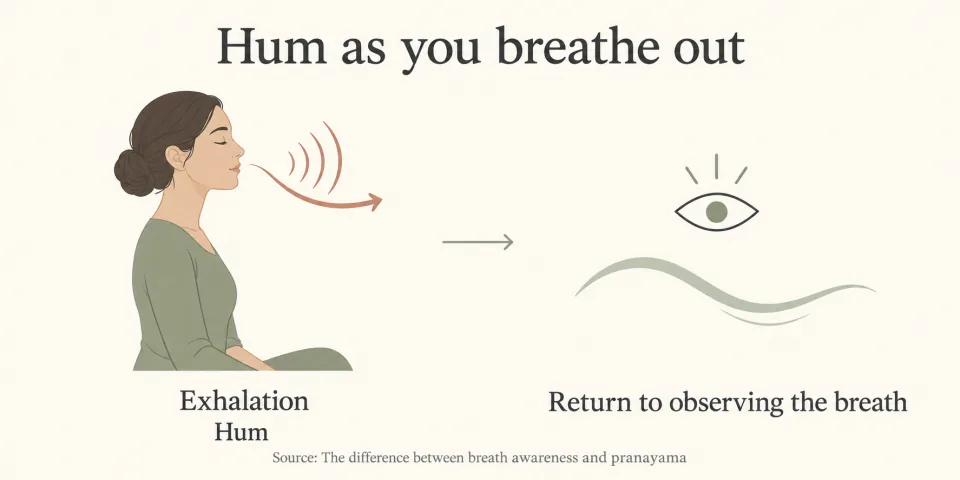
Humming is followed by a return to observing the breath. Image: Yogasana Live Stage 6 of 6
Return to observing the breath
Let go of the deliberate humming, nostril sequence or matching rhythm you are using. Return to noticing breathing without asking the next breath to repeat that pattern.
Observe the next inhalation as it comes. Returning to awareness means leaving its depth and timing unchanged, rather than trying to make it resemble the opening of the practice.
Let the exhalation follow without imposing a matching count. The change back to observation occurs when you stop using an instruction to shape the breath.
Listen for that kind of transition within a class exercise. A practice can begin with observation and later introduce regulation, so its opening instruction need not describe everything that follows.
Follow the unchanged opening of New Mexico Tech's breath-focus exercise as an example. At that stage, the breathing remains as it is while the practitioner attends to it.
Recognise the transition when the same exercise introduces alternating normal and deep breaths. The request to change depth adds deliberate adjustment to the observation that begins the exercise.
Recognise where breath practice appears in the NIOS lesson. In the NIOS lesson's sequence, asana practice comes before pranayama, with meditation following.
Begin with natural breathing awareness when following the NIOS introduction to work with the breath. The lesson uses this starting point to introduce observation of existing breathing patterns.
Notice whether a movement instruction also specifies the breathing. Kerala Tourism describes pranayama alongside asana practice, including posture instructions that incorporate breath regulation.
Identify the breathing task even when the body changes position. A seated exercise and a moving practice can both include regulation; the instruction about the breath tells you what is being asked.
Ask a prospective yoga instructor what training they have completed and what experience they have, following guidance from the National Center for Complementary and Integrative Health.
Bring your attention to the whole seated body to close, as in Berkeley's practice. Include the sitting position in your awareness while the breath continues without a new pattern to follow.
Sources for this practice
How this practice came to be
- Written
- By Yogasana Live; no person is named as its writer
- What it rests on
- 8 sources
More from the library
How to warm up before sun salutations
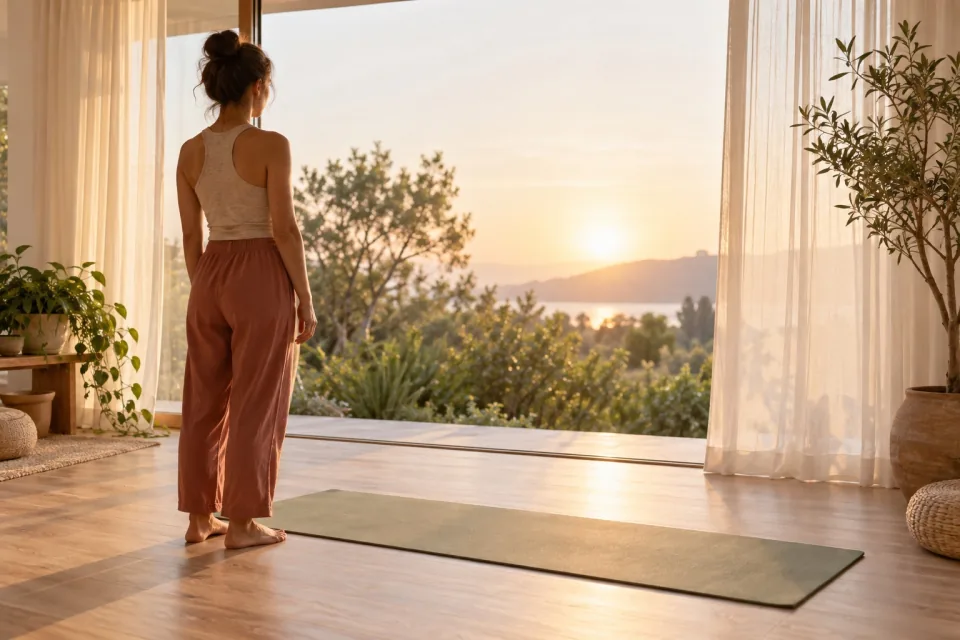
Follow a guided preparation sequence for reaching overhead, folding at the hips and supporting yourself through your hands, then move into the opening of your sun salutation.
Yoga meditation for a noisy home
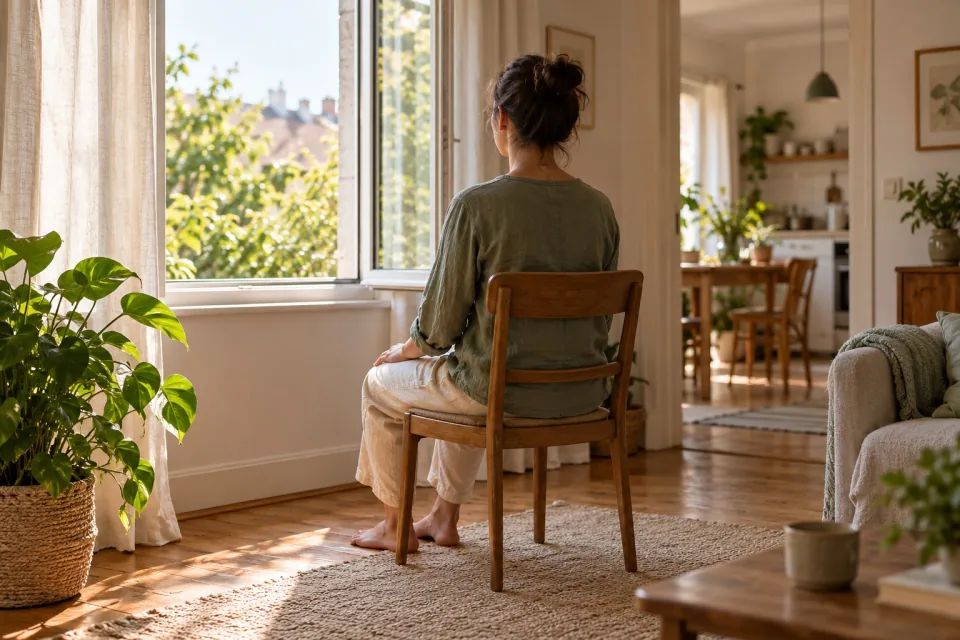
Follow a seated meditation practice with ordinary household sounds present. Explore breath, sound and touch as attention anchors, then practise returning after wandering thoughts or an interruption.
Head-to-knee pose: align your torso before folding
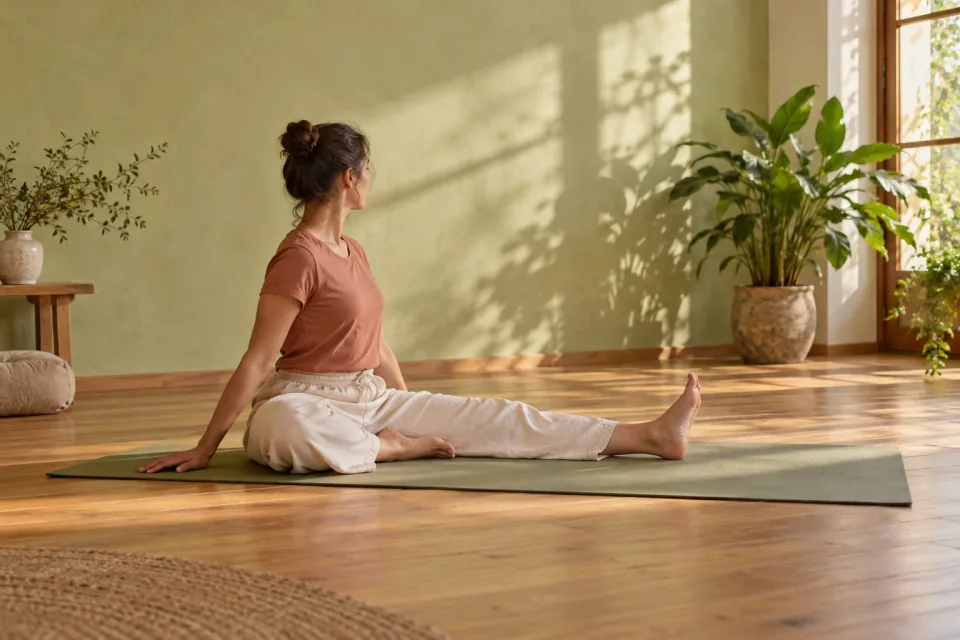
Follow a seated practice that guides your abdomen and ribs toward the extended leg. Choose a reachable hand position, fold from the hips and practise lifting out to reset your alignment.